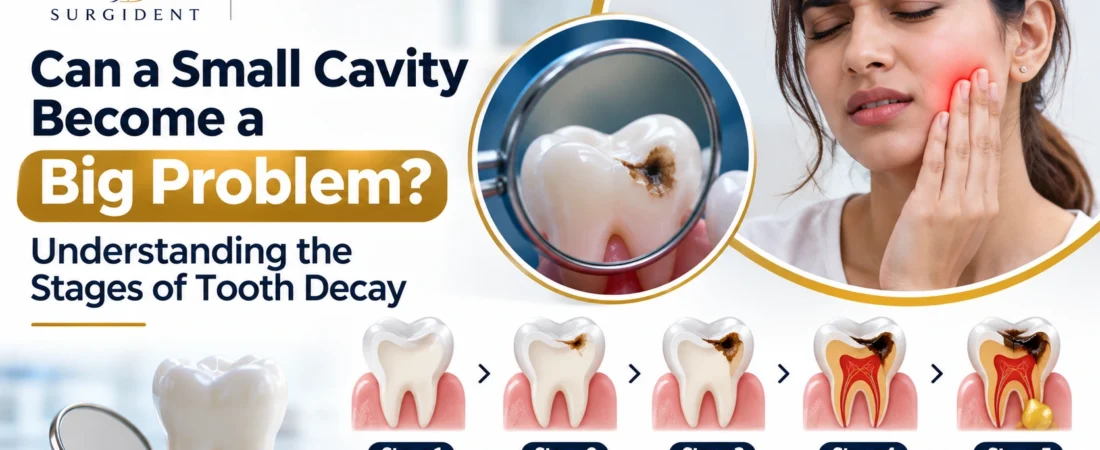
A tiny dark spot on a back tooth rarely worries anyone. It does not hurt, so most people leave it for later. Months pass, and one night the same tooth throbs so badly that sleep becomes impossible. By then the decay has usually travelled much deeper than the spot ever suggested.
Yes, a small cavity can become a big problem, because decay keeps spreading through the tooth until a dentist stops it. This guide explains the five stages of tooth decay, the signs at each stage and the treatment that usually fits. It also shows when a visit to a dentist in Punawale should not wait.
Can a Small Cavity Really Become a Big Problem?
Yes. A tooth has three layers: hard outer enamel, softer dentin below it and a centre called the pulp, which holds the nerves and blood vessels. Enamel has no nerves, so early decay causes no pain. Once decay breaks through the enamel, it spreads faster in the softer dentin and then reaches the pulp. Care that needed one short visit at the start may need a root canal or an extraction later.
A cavity does not close or heal by itself once a hole has formed. Only the very first stage, before any hole appears, can be stopped or reversed.
A cavity that does not hurt is not a cavity that is harmless. Pain usually arrives late.
What Causes a Cavity to Start?
Decay begins when plaque, the sticky film of bacteria on your teeth, turns sugar into acid. The acid strips minerals from the enamel. Saliva and fluoride can put some minerals back, but constant sugar keeps tipping the balance towards loss. These habits raise the risk most:
- Frequent sugar: sweet chai through the day, biscuits, toffees and sweets eaten between meals
- Irregular cleaning: skipping night-time brushing or never flossing between teeth
- Dry mouth: low saliva from medicines, mouth breathing or too little water
- Hard-to-clean spots: deep grooves, crowded teeth and wisdom teeth at the back
- Old dental work: worn fillings and crowns with gaps at the edge
How often you eat sugar matters more than how much you eat at one time, because each sweet snack starts a fresh acid attack on the enamel.
What Are the 5 Stages of Tooth Decay?
Dentists describe tooth decay in five stages. Knowing them helps you judge how urgent a spot or a twinge really is.
Stage 1: Demineralization (White Spots)
A chalky white spot appears on the enamel where acid has stripped out minerals. The surface is still intact, so there is no hole and usually no pain. This is the only stage at which decay can be stopped or reversed. Fluoride toothpaste, fluoride treatment from the dentist, sealants and fewer sugary snacks can help the enamel recover.
White spots are a warning sign, and this is the easiest stage to fix.
Stage 2: Enamel Decay
The white spot darkens to brown and a small hole starts to form. The tooth may still feel normal, though food can catch in the hole. A filling removes the decayed part and restores the tooth.
A small hole needs a filling, and waiting only makes the filling bigger.
Stage 3: Dentin Decay
Decay reaches the dentin and spreads faster there. Hot, cold or sweet food now causes a sharp, short twinge. The cavity is larger, so the dentist may need a bigger filling or a crown to protect what remains of the tooth.
Sensitivity to hot, cold or sweet things often means decay has passed the enamel.
Stage 4: Pulp Damage
Bacteria reach the pulp and the nerve becomes inflamed. The tooth aches on its own, often at night, and the pain can last long after a hot or cold drink. A filling alone usually cannot help at this stage. Root canal treatment in Punawale removes the infected pulp, cleans the canals and seals the tooth so it can stay in the mouth. If the tooth is too broken to rebuild, the dentist may advise extraction.
Pain that comes without a trigger or wakes you at night means the nerve is involved.
Stage 5: Abscess
Infection spreads past the root tip and forms a pocket of pus. Signs include severe pain that can spread to the jaw or ear, swelling of the gum or face, a bad taste in the mouth and sometimes fever. This needs urgent care. Treatment may involve draining the infection, followed by a root canal or an extraction. Swelling that makes breathing or swallowing hard needs emergency hospital care.
Facial swelling or fever with a toothache means you should see a dentist the same day.
Can a Lost Tooth Be Replaced After Severe Decay?
Yes. When a tooth cannot be saved, the gap should not stay empty for long, because the neighbouring teeth tilt and the bite changes. A dental implant replaces the tooth root and the crown. Dentures are another option, especially when several teeth are missing. The dentist suggests the right choice after checking the gum and bone.
Replace a lost tooth in good time, because an empty gap slowly changes the bite.
Why Do Cavities Spread Faster in Children?
Milk teeth have thinner enamel than adult teeth, so decay reaches the pulp sooner. Sweets, packaged snacks, sugary milk at bedtime and a feeding bottle left in the mouth all raise the risk. Parents often think milk teeth do not matter because they fall out, but a decayed milk tooth can cause pain and infection, make eating difficult and affect the permanent tooth growing below it. Regular dental visits for children let the dentist spot white spots early and apply sealants or fluoride.
A cavity in a milk tooth deserves treatment, not a wait for the tooth to fall out.
Do Wisdom Teeth and Crowded Teeth Raise the Risk of Decay?
Yes, they can. Wisdom teeth sit at the very back, so brushing and flossing there are difficult and food gets trapped. Crowded or overlapping teeth create tight corners that a brush cannot reach. A partly erupted wisdom tooth that keeps decaying or causing pain may need removal. For crowding, teeth alignment with braces or aligners makes teeth easier to clean, though braces themselves need extra cleaning care.
Teeth you cannot clean are the teeth that decay first.
Can a Tooth With a Filling or Root Canal Decay Again?
Yes. Decay can start at the edge of an old filling or crown, and a root-treated tooth can become infected again if bacteria leak in through a worn seal or a crack. Warning signs are new pain, swelling, a pimple on the gum or a bad taste around a tooth treated years ago. In many such cases a repeat root canal can clean the tooth again so that it does not have to be removed.
Treated teeth still need check-ups, because old repairs can leak.
How Can You Stop a Small Cavity From Growing?
- Brush twice a day: use a fluoride toothpaste, and never skip the night-time brushing
- Clean between teeth: floss or use interdental brushes once a day
- Space out sweet snacks: keep sugar to mealtimes and rinse with water afterwards
- Drink enough water: it keeps saliva flowing and washes away food
- Visit every six months: or as often as your dentist advises, even when nothing hurts
- Act on small signs: a white spot, a rough patch or a twinge deserves a check
Whiten only after any cavities are treated. Teeth whitening removes stains, not decay, so white or brown spots caused by decay will not whiten away.
Small habits kept every day protect enamel better than any single treatment.
When Should You See a Dentist Right Away?
Book a visit with a dentist in Punawale if you notice any of these:
- Visible changes: white, brown or black spots, or a hole you can feel with your tongue
- Sensitivity: a twinge to hot, cold or sweet food that lasts more than a few days
- Pain: a toothache at night or pain that comes without any trigger
- Swelling: a swollen gum, cheek or jaw, a pimple on the gum or a bad taste
- Broken repairs: a cracked tooth or a filling or crown that has come loose
Many families look for a dentist only after the pain starts. A better approach is to choose a dental clinic in Punawale before a problem begins, so a small spot gets checked while it is still easy to fix.
How Does Surgident Dental Clinic Treat Tooth Decay?
Surgident Dental Clinic is a dental clinic in Punawale run by Dr. Shikha Sinha. A visit usually starts with a talk about your symptoms and a careful examination of every tooth. The dentist may take an X-ray to check for decay between teeth or under an old filling, which the eye cannot see. The treatment then depends on the stage: fluoride care for white spots, a filling for a cavity, root canal treatment in Punawale for an infected nerve or an extraction when a tooth cannot be saved. The dentist explains each option before starting.
Frequently Asked Questions About Cavities and Tooth Decay
Can a small cavity go away on its own?
No, not once a hole has formed. Only the white-spot stage, before the enamel breaks, can be stopped or reversed with fluoride and better care. A cavity needs a filling.
Does a cavity always hurt?
No. Early cavities are usually painless because enamel has no nerves. Pain tends to start only when decay reaches the dentin or the pulp, which is why regular check-ups find cavities that you cannot feel.
Is tooth sensitivity always a sign of a cavity?
Not always. Worn enamel, gum recession, a cracked tooth or recent whitening can also cause sensitivity. A dentist can find the cause by examining the tooth, so do not guess.
Do all deep cavities need a root canal?
No. A root canal is needed only when decay has damaged or infected the pulp. A shallow or medium cavity usually needs only a filling. The dentist decides after the examination and, when needed, an X-ray.
Do cavities in milk teeth need treatment?
Yes. A decayed milk tooth can hurt, spread infection and affect the permanent tooth below it. Treatment also helps the child chew well and keeps space for the permanent teeth.
When should I see a dentist in Punawale for a toothache?
See a dentist soon if a toothache lasts more than a day or two, wakes you at night or comes with swelling or fever. A dentist in Punawale can find the cause and treat it before it spreads. Swelling that makes breathing or swallowing hard needs emergency care.
Book a Check-Up at Surgident Dental Clinic, Punawale
If you have a dark spot, a twinge or a toothache, do not wait for it to get worse. Call the dental clinic in Punawale and book a check-up while the problem is still small.
- Clinic: Surgident Dental Clinic
- Dentist: Dr. Shikha Sinha
- Address: Office No. 308, Theia Business Park, Kate Wasti, Punawale, Pimpri-Chinchwad, Maharashtra 411033
- Phone: +91 87675 41406
- Hours: Monday to Sunday, 10:00 AM to 9:00 PM
- Website: surgidentpune.com
This article gives general information and does not replace dental advice. Every mouth is different. Consult a qualified dentist about your teeth, symptoms or treatment.
Stages of tooth decay: Colgate Oral Care, Your Guide to Tooth Decay Stages (colgate.com).