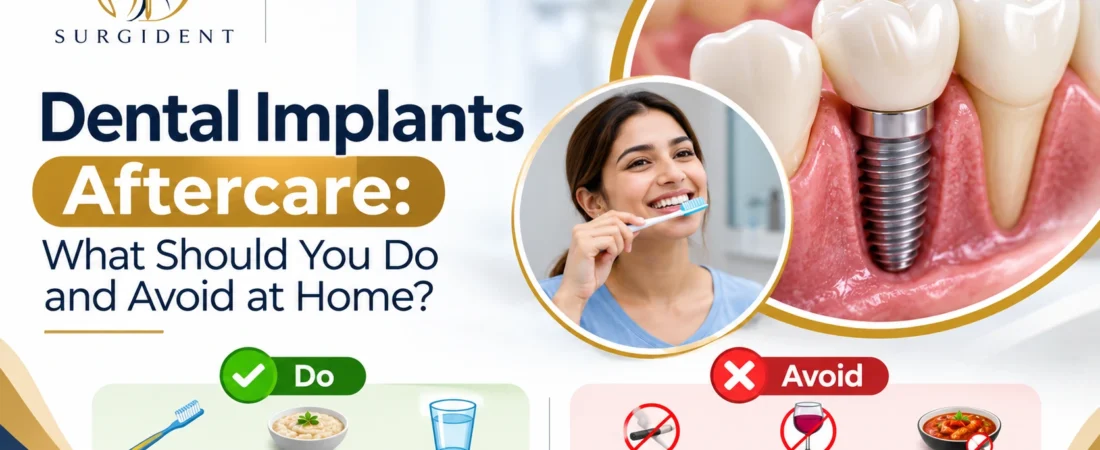
Good dental implants aftercare starts the moment you leave the clinic. For the first few days, the goal is to protect the surgical site, control swelling and keep your mouth clean without disturbing the healing gum. Over the following months, the goal shifts to helping the implant bond with your jawbone. After that, daily cleaning and regular check-ups keep the implant and the gum around it healthy for the long term.
This guide explains dental implants aftercare at each stage, covering what to do and what to avoid at home, from the first 24 hours to years after treatment. It is written for patients who have just had an implant placed and for those preparing for dental implant treatment in Punawale who want to know what recovery involves.
Key takeaway: An implant cannot get a cavity, but the gum and bone around it can still become infected. Aftercare protects the foundation that holds the implant in place.
Why Does Dental Implants Aftercare Matter So Much?
A dental implant is a small post placed in the jawbone to replace the root of a missing tooth. Over the next few months, the bone grows around the implant surface and locks it in place. Dentists call this process osseointegration. A crown is usually fitted only after this bond is strong enough to handle chewing forces.
Your dental implants aftercare at home affects this process directly. Smoking reduces blood flow to the healing site. Chewing hard food on the implant too early can disturb it before the bone has bonded. Poor cleaning allows bacteria to collect around the implant, where they can inflame the gum and eventually damage the supporting bone.
That last risk is more common than many patients realise. A systematic review published in the Journal of Clinical Periodontology in 2015 (Derks and Tomasi) estimated the following:
- Peri-implant mucositis: inflammation of the gum around the implant, without bone loss, affected about 43 percent of implant patients.
- Peri-implantitis: inflammation that has started to destroy the bone around the implant affected about 22 percent of patients.
Mucositis can usually be reversed with professional cleaning and better home care. Peri-implantitis is harder to treat. Consistent dental implants aftercare is the most practical way to stay on the right side of that line.
What Should You Do in the First 24 Hours After Implant Surgery?
The first day of dental implants aftercare is about controlling bleeding and swelling and letting a stable blood clot form over the surgical site. Follow these steps unless your dentist has given you different instructions:
- Bite gently on the gauze: Keep steady pressure on the gauze pad for 30 to 60 minutes after you leave the clinic. Replace it with a fresh piece if light oozing continues.
- Use a cold compress: Hold an ice pack wrapped in a cloth against your cheek for 15 to 20 minutes, then remove it for 15 to 20 minutes. Repeat this cycle through the first day.
- Rest with your head raised: Use an extra pillow when you lie down. Keeping your head above heart level helps limit swelling.
- Take medicines as prescribed: Start pain relief before the anaesthesia wears off if your dentist has advised it. Complete any course of antibiotics exactly as prescribed.
- Eat only soft, cool food: Choose items that need little or no chewing, such as curd, buttermilk, smooth dal or mashed potato. Wait until the numbness wears off so you do not bite your cheek or tongue.
- Drink plenty of water: Sip slowly from a glass.
A little pink saliva and mild swelling on the first day are normal. Swelling usually peaks around the second or third day and then starts to settle.
What Should You Avoid in the First Few Days?
Many complications after implant surgery come from well-meaning habits that disturb the healing site too early. Good dental implants aftercare means avoiding the following for at least the first 72 hours, or longer if your dentist advises:
- Rinsing or spitting forcefully: This can dislodge the blood clot. Let liquid fall gently out of your mouth instead.
- Drinking through a straw: The suction has the same effect as forceful spitting.
- Smoking or chewing tobacco: Tobacco in any form slows healing and is a well-known risk factor for implant failure. If you use gutka, paan masala or cigarettes, this is the most important time to stop.
- Alcohol: It can interfere with healing and with prescribed medicines.
- Very hot drinks and spicy food: Hot tea or coffee and heavily spiced dishes can irritate the wound and increase bleeding.
- Touching the site: Keep your tongue and fingers away from the implant area.
- Heavy exercise: Strenuous activity raises blood pressure and can restart bleeding. Light walking is fine.
Key takeaway: For the first three days, protect the blood clot. No straws, no forceful spitting and no tobacco.
What Can You Eat After Dental Implant Surgery?
Diet is a large part of dental implants aftercare. Your meals should move gradually from liquids to normal food as the area heals. Chew on the opposite side of your mouth until your dentist says the implant can take pressure.
- Days 1 to 3: Cool or lukewarm soft foods such as curd, buttermilk, smooth dal, soft khichdi, mashed potato, banana and smoothies without seeds.
- Days 4 to 14: Soft cooked foods such as idli, upma, poha, soft rice, well-cooked vegetables, scrambled eggs, paneer and soft roti soaked in dal.
- After two weeks: Most patients can return to a normal diet on the other side of the mouth, while still avoiding very hard or sticky food on the implant side.
- Until the crown is fitted and your dentist confirms full healing: Avoid biting directly on the implant site with hard foods.
Avoid these foods during the healing period:
- Hard and crunchy foods: Nuts, chikki, papad, hard toast and corn on the cob.
- Sticky foods: Toffees, chewing gum and very chewy sweets.
- Small seeds and grains: Sesame seeds, popcorn husks and seeded fruits can lodge in the healing gum.
- Very hot or very spicy food: These can irritate the site in the first week.
How Should You Clean Your Mouth While the Implant Heals?
Keeping the mouth clean lowers the risk of infection, but cleaning during dental implants aftercare has to be gentle while the gum is healing.
- Day 1: Do not brush near the surgical site and do not rinse. You can gently brush the teeth away from the area.
- From Day 2: Start warm salt water rinses if your dentist has advised them. Mix half a teaspoon of salt in a glass of warm water and let it move gently around your mouth after meals and before bed. Do not swish hard.
- Medicated mouthwash: Use a chlorhexidine mouthwash only if your dentist prescribes it, and only for the period advised. Long-term use can stain teeth.
- Brushing near the implant: Use a soft or extra-soft toothbrush and clean the area slowly once your dentist says it is safe, usually after the first few days.
- Stitches: Some stitches dissolve on their own. Others are removed at a follow-up visit, often within one to two weeks.
How Do You Care for Dental Implants in the Long Term?
Once the implant has bonded with the bone and the final crown is in place, long-term dental implants aftercare looks much like caring for a natural tooth. The difference is that the gum seal around an implant is less resistant to bacteria than the seal around a natural tooth, so plaque control around the implant needs extra attention.
- Brush twice a day: Use a soft-bristled brush and a non-abrasive toothpaste. Angle the bristles towards the gumline around the implant crown.
- Clean between teeth every day: Interdental brushes, implant floss or a water flosser can reach the sides of the implant where a toothbrush cannot.
- Attend regular check-ups: Most patients are advised to visit every six months. Your dentist checks the gum around the implant, the bite and the crown, and may take an X-ray to check the bone level.
- Get professional cleaning: Hygienists use instruments that are safe for implant surfaces and do not scratch them.
- Wear a night guard if you grind your teeth: Grinding places heavy force on the implant and crown. Tell your dentist if you wake with jaw pain or headaches.
If you are still deciding whether an implant suits you, the page on dental implant treatment in Punawale explains how the procedure works and who it may be suitable for. Patients comparing options for several missing teeth may also find the page on denture treatment helpful.
Which Habits Can Damage Your Dental Implants?
An implant crown is strong, but it is not unbreakable. Certain habits put it at risk over time:
- Using teeth as tools: Opening bottle caps, tearing packets or biting thread can chip or loosen the crown.
- Chewing ice or hard objects: Biting on ice, pens or fingernails places sudden force on the implant.
- Tobacco use: Smoking and chewing tobacco remain long-term risk factors for gum and bone problems around implants.
- Skipping check-ups: Early inflammation around an implant is often painless, so it can go unnoticed without a professional examination.
- Uncontrolled diabetes: Poorly controlled blood sugar slows healing and raises the risk of gum infection. Keep your physician and dentist informed about your health.
What Warning Signs Mean You Should Call Your Dentist?
Some discomfort is normal after implant surgery, and knowing the warning signs is part of dental implants aftercare. Call your dentist promptly if you notice any of the following:
- Bleeding that does not slow down: Bleeding that continues after an hour of firm gauze pressure.
- Swelling that keeps increasing: Swelling that grows after the third day instead of settling.
- Fever or pus: These suggest infection and need prompt attention.
- Pain that worsens: Pain that gets stronger after the first few days or is not controlled by prescribed medicine.
- Persistent numbness: Numbness of the lip, chin or tongue that continues long after the anaesthesia should have worn off.
- A loose implant or crown: Any movement of the implant or the crown.
- Long-term changes: Bleeding gums, gum recession or a bad taste around the implant months or years after treatment.
Key takeaway: Early gum inflammation around an implant often causes no pain. Bleeding on brushing is a reason to book a check-up, not to wait.
Where Can You Get Dental Implant Treatment in Punawale?
Implant treatment involves several visits, including placement, follow-up, stitch removal, crown fitting and routine check-ups. Choosing a dental clinic in Punawale close to home makes it easier to keep every appointment, especially in the first few weeks when follow-up matters most.
At Surgident The Dentist Clinic, Dr. Shikha Sinha, a dental surgeon in Punawale, provides dental implant treatment in Punawale with a focus on assessment before treatment and clear dental implants aftercare guidance after it.
- Experience: Dr. Shikha Sinha is a dental surgeon with more than 12 years of clinical experience.
- Individual planning: The gum, jawbone, neighbouring teeth and bite are assessed before an implant is recommended.
- Follow-up support: Patients receive written aftercare instructions and scheduled review visits.
- Location: Office No. 308, Theia Business Park, Kate Wasti, Punawale, convenient for patients from Gaikwad Nagar, Pandhare Wasti, Koyte Wasti, Vishnu Dev Nagar and Malwadi.
- Timings: Monday to Sunday, 10 AM to 9 PM.
Frequently Asked Questions
How long does it take to recover from dental implant surgery?
Most patients return to normal daily activities within two to three days. Gum healing usually takes one to two weeks. Full bonding of the implant with the jawbone commonly takes a few months, and your dentist will confirm when the area is ready for the final crown.
When can I brush near my dental implant?
You can brush the rest of your teeth from the first day. Brush gently near the implant site with a soft toothbrush once your dentist confirms it is safe, which is usually after the first few days.
Can I drink tea or coffee after dental implant surgery?
Avoid hot drinks for the first 24 to 48 hours. After that, lukewarm tea or coffee is generally fine. Avoid using a straw during the first week.
Is swelling normal after a dental implant?
Yes. Mild to moderate swelling is common and usually peaks around the second or third day. Contact your dentist if swelling keeps increasing after the third day or comes with fever.
Which part of dental implants aftercare matters most in the first week?
Protecting the blood clot and keeping tobacco away from the site matter most in the first week. Avoid straws, forceful spitting, smoking and hard food, and keep the area clean with gentle salt water rinses if your dentist advises them.
How long do dental implants last?
With good dental implants aftercare, regular check-ups and healthy habits, implants can serve for many years. The crown may need replacement over time due to normal wear, even when the implant itself remains stable.
Who should I see for a dental implant in Punawale?
Choose a dental surgeon in Punawale who assesses your gum and jawbone before recommending an implant and who provides written aftercare instructions. Dr. Shikha Sinha at Surgident The Dentist Clinic follows this approach.
Where can I get dental implant treatment in Punawale?
Surgident The Dentist Clinic, a dental clinic in Punawale at Theia Business Park, Kate Wasti, offers dental implant consultations, treatment and follow-up care with Dr. Shikha Sinha. You can call +91 87675 41406 to book an appointment.
Plan Your Implant Recovery With Confidence
Dental implants aftercare is not complicated, but it does need consistency. Protect the site for the first few days, eat soft food, keep the area clean, stay away from tobacco and keep every follow-up visit. These steps give the implant good conditions to heal and stay healthy for the long term.
If you have questions about your recovery or are considering an implant, visit Surgident, a dental clinic in Punawale, to consult Dr. Shikha Sinha. Call +91 87675 41406 or book an appointment to discuss your options.